Japanese eel knowledge base
Japanese Eel and Kabayaki: The Complete Unagi Guide
A long-form reference for global readers researching Japanese eel, kabayaki, shirayaki, tare, unaju, unadon, hitsumabushi, and the craft behind grilled eel in Japan.
Unagi
Japanese freshwater eel prepared as a premium dish, most often grilled and served with rice.
Kabayaki
A tare-brushed grilling method, not simply a sweet sauce poured over eel.
Shirayaki
Grilled eel without tare, used to appreciate the original aroma, fat, and texture of the eel.
Commerce status
KatanaUnagi global pages remain education and waitlist only until international operations are ready.
Internal path
This page is the English cornerstone. Published cluster articles link from here only after reviewed routes are implemented; planned clusters remain roadmap cards.
01 / Foundation
What is unagi?
Unagi is Japanese freshwater eel, but the word carries a broader culinary context than “eel” in English search results.
In Japanese cuisine, unagi usually refers to freshwater eel prepared as a cooked dish, especially grilled eel served with rice. International readers often arrive through broad searches such as “Japanese eel”, “eel sushi”, “grilled eel”, or “unagi sauce”. Those searches point to related but different subjects: the ingredient, the cooking method, the sauce, and the rice dish.
A useful global guide should therefore define unagi from the dining table backward. The reader needs to understand the eel itself, the way it is opened and cooked, the role of tare, and the reason rice is central. Without that structure, unagi is reduced to a luxury keyword or a sushi topping, which is inaccurate for the classic Japanese meal experience.
- Unagi usually means freshwater eel, not anago, the saltwater conger eel common in sushi contexts.
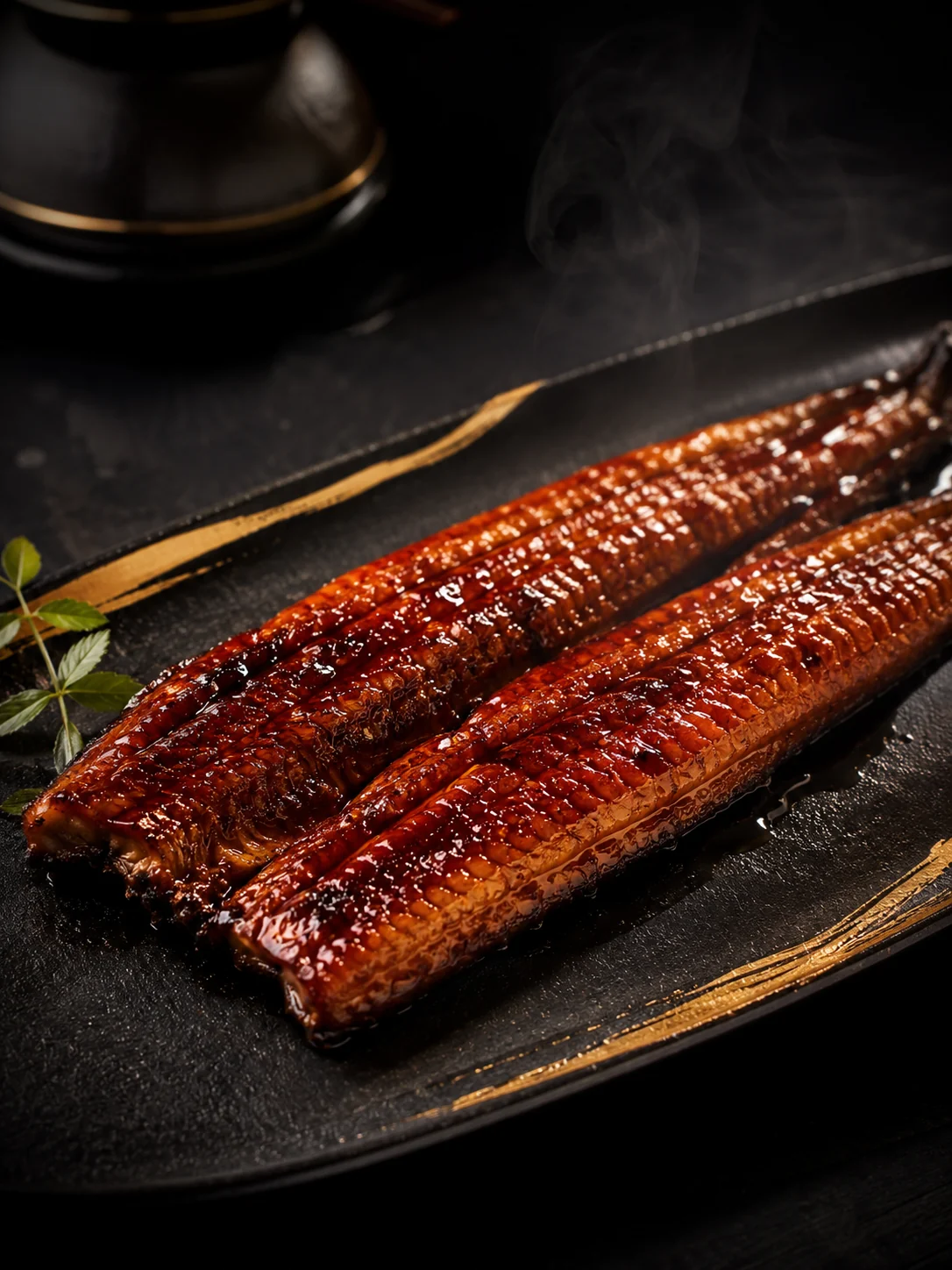
- The most recognized preparation is kabayaki: opened eel, skewered, grilled, and brushed with tare.
- The classic meal is rice-centered: unaju, unadon, and related styles are built around the interaction of eel, tare, and hot rice.
02 / Method
What is kabayaki?
Kabayaki is a full preparation system: knife work, skewering, heat control, tare brushing, and final texture management.
Kabayaki is often described overseas as “grilled eel with sweet sauce”. That is directionally understandable, but too shallow for search leadership. Kabayaki is a method. The eel is opened, usually skewered, grilled, brushed with tare, and finished so that the surface becomes glossy, aromatic, and integrated with the rice it will be served on.
The important point is balance. Good kabayaki should not taste only sweet. The surface should carry soy-based depth, the fat should feel rich but clean, and the final aroma should connect the sauce, smoke, and rice. That is why kabayaki content needs to explain process, not only ingredients.
- The sauce is applied in stages rather than treated as a separate topping.
- The best result depends on the relationship between skin, flesh, fat, tare, and heat.
- Kabayaki is commonly served as unaju or unadon, but the cooking method and the serving format are not the same thing.
03 / Comparison
Kabayaki vs shirayaki
Kabayaki emphasizes tare and grilled aroma; shirayaki shows the eel before the sauce.
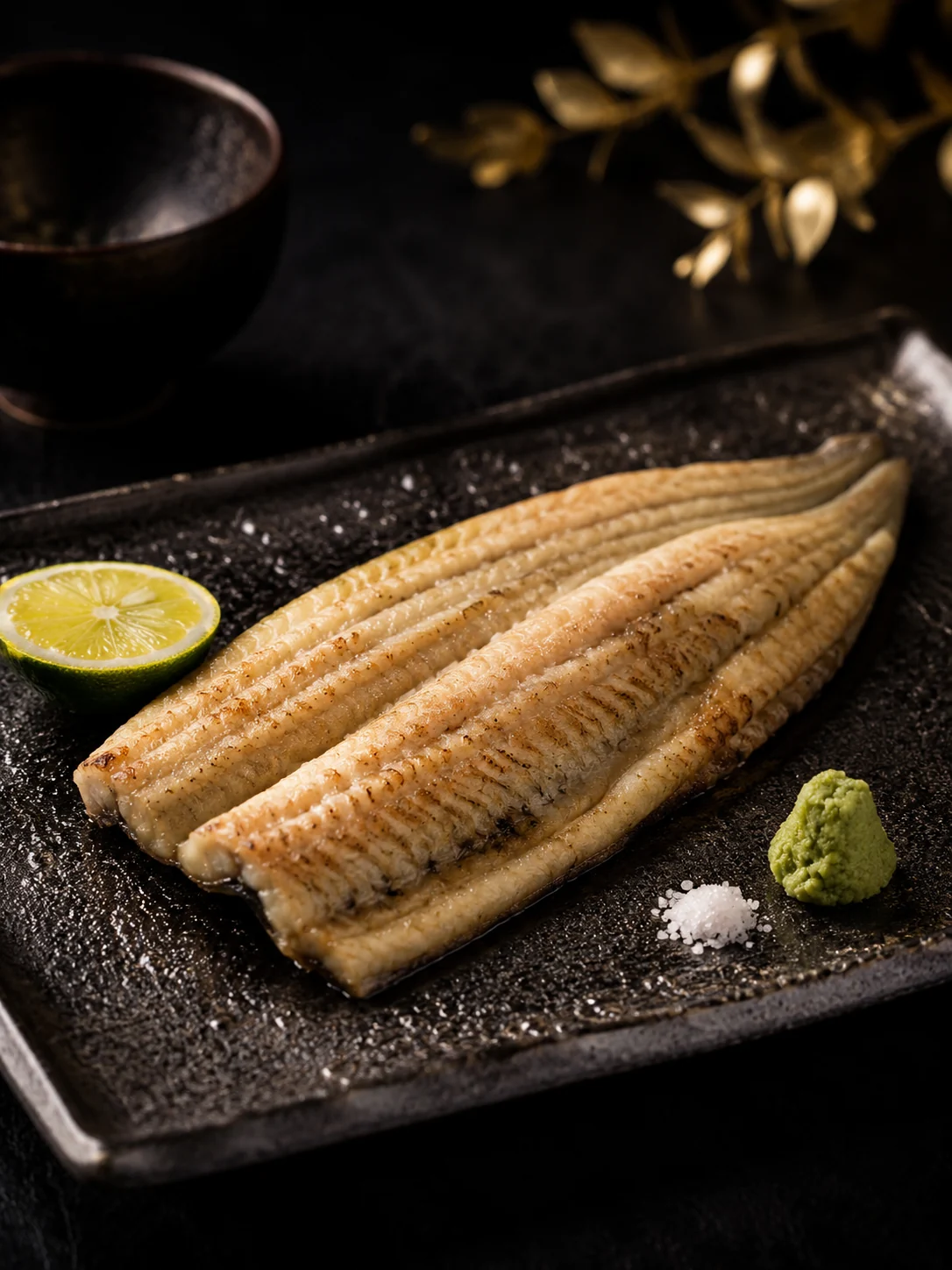
Shirayaki is grilled eel served without tare. It is often enjoyed with salt, wasabi, or a light dipping accent. For a first-time reader, shirayaki is useful because it separates the eel from the sauce. It makes the aroma, fat quality, and texture easier to notice.
Kabayaki and shirayaki should not be framed as “better” or “worse”. They answer different dining questions. Kabayaki asks how eel, tare, smoke, and rice become one dish. Shirayaki asks whether the eel itself has clean aroma, pleasing fat, and enough character to stand with minimal seasoning.
- Kabayaki: tare-brushed, aromatic, rice-friendly, and widely recognized internationally.
- Shirayaki: sauce-free, ingredient-focused, and useful for understanding eel quality.
- A strong content cluster should give each style its own article after the cornerstone page is established.
04 / Sauce
Tare: continuity, not decoration
Tare is the sauce brushed onto kabayaki, but its SEO value comes from explaining its function rather than listing ingredients.
Tare usually has a soy sauce base with seasonings such as mirin, sugar, and sake or similar elements. However, the ingredient list is not the main story. In unagi culture, tare expresses house style. It seasons the surface, encourages gloss, supports browning, and links the eel to the rice.
For international pages, “unagi sauce” search demand can be captured without misleading readers into thinking the sauce alone defines the dish. Tare should be explained as a craft component: strong enough to create aroma, restrained enough not to erase the eel.
- Do not translate tare simply as “BBQ sauce”; it is a Japanese sauce and brushing system.
- Explain tare with romanization first, then a local-language explanation on future locale pages.
- Avoid secret-recipe claims unless the operation can substantiate them clearly.
05 / Fire
Charcoal grilling and aroma control
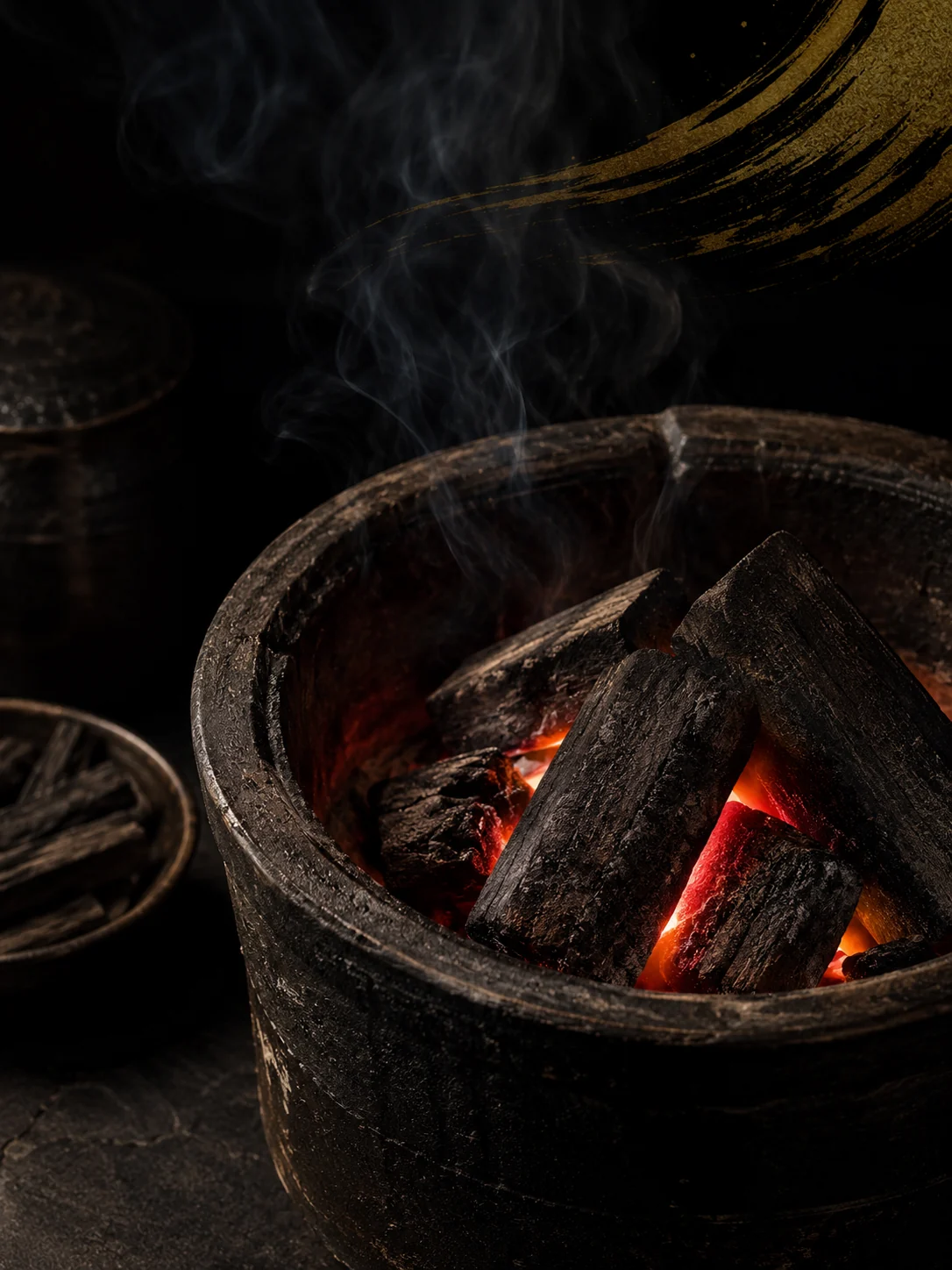
Charcoal matters because it shapes the aroma and the drying/softening balance of the eel surface.
The phrase “charcoal grilled eel” has clear international search value, but the page should avoid turning charcoal into a vague luxury adjective. The role of charcoal is heat and aroma control. It can help create a fragrant surface while the cook protects the flesh from drying out.
Grilling eel is a sequence of decisions: distance from heat, timing, surface drying, tare brushing, and final finish. Over-explaining every shop technique would be inappropriate, but the cornerstone page should make one thing clear: kabayaki quality depends on controlled repetition, not a single dramatic flame moment.
- Use photography of charcoal, grilling, and finished eel where possible; avoid images with embedded Japanese text.
- Describe aroma in concrete terms: soy caramelization, clean fat, smoke, and rice steam.
- Keep claims specific to the brand only when backed by actual operation details.
06 / Regional style
Kanto and Kansai cooking differences
Eastern and western Japan are often contrasted through steaming and direct grilling, but the explanation must avoid rigid stereotypes.
Many guides explain that Kanto-style eel is steamed before the final grill, while Kansai-style eel is grilled more directly. This is a useful entry point, but it should be presented as a broad tendency, not a law. Individual shops vary, and the best explanation focuses on the resulting texture and aroma rather than forcing every shop into a simple map.
For readers, the difference is practical. Steaming can create a softer, lighter texture. More direct grilling can create a firmer bite and stronger grilled surface. Both approaches can be excellent when the eel, heat, tare, and rice are in balance.
- Kanto tendency: opened from the back in many traditions, steamed, then grilled for softness.
- Kansai tendency: opened from the belly in many traditions and grilled more directly for a stronger surface.
- Future local-language pages should use careful wording such as “often” and “commonly”, not absolute rules.
07 / Rice dishes
Unaju, unadon, and hitsumabushi
The most searched dish names are not interchangeable; they tell readers how eel is served and eaten.
Unadon is commonly served in a bowl, while unaju is served in a lacquer-style box. Both are built around grilled eel and rice, but the presentation changes the dining impression. The rice is not a neutral base. It absorbs tare, softens the intensity of eel fat, and carries aroma upward as steam.
Hitsumabushi is a Nagoya-associated way of eating chopped grilled eel over rice, often enjoyed in stages: first as-is, then with condiments, and then with broth or tea. It deserves mention in the cornerstone article because many global readers encounter the word in travel and restaurant contexts even when they are not looking to buy eel online.
- Unadon: grilled eel over rice in a bowl.
- Unaju: grilled eel over rice in a box-style vessel, often associated with premium presentation.
- Hitsumabushi: chopped grilled eel over rice, commonly eaten in stages with condiments and broth or tea.
08 / Practical use
How to reheat grilled unagi without drying it out
Reheating guidance is a high-intent future cluster because it connects education to eventual shipping operations without exposing a checkout.
A cornerstone page should include a concise reheating section even before international shipping is available. Readers searching “how to reheat unagi” already have eel or are evaluating whether shipped grilled eel can taste good. The key is to restore warmth and surface aroma without turning the flesh dry or rubbery.
Specific package instructions should always override general advice. For a general educational page, the safest framing is principle-based: thaw gently if frozen, warm through without aggressive heat, finish the surface briefly when appropriate, and serve immediately over hot rice so the texture and aroma are supported.
- Thaw gently in the refrigerator if the product is frozen and the package instructions allow it.
- Warm the eel through with moderate heat; avoid long, dry, high-heat exposure.
- Use a short final grill or toaster finish only when suitable for the product, then serve with hot rice immediately.
09 / Culture
Unagi as a gift in Japanese culture
Premium eel can be understood as a seasonal and business gift, but global pages must avoid implying international gift delivery is active.
In Japan, premium food gifts can express respect, timing, and consideration. Unagi has seasonal associations, especially around midsummer eating customs, and can also work as a formal food gift when packaging, timing, and recipient context are handled correctly.
For global SEO, gift content should explain culture before commerce. International readers may be researching Japanese corporate gifts or premium food gifting, but the page must clearly state that overseas ordering is not active. This avoids misleading functionality while still building future demand and waitlist intent.
- Explain gifting as cultural context, not as an active international sales promise.
- Avoid overseas delivery dates, overseas price ranges, or corporate order claims until operations are ready.
- Use the waitlist as the only conversion path on global pages.
10 / Responsibility
Sustainability, traceability, and responsible sourcing
International readers increasingly expect sourcing clarity; vague luxury language is not enough.
Japanese eel has cultural value and resource-management complexity. A responsible global content strategy should not treat eel as a simple luxury keyword. Readers, buyers, chefs, and media researchers will ask what the seller knows about sourcing, production records, and handling standards.
The strongest position is transparent and careful: explain what can be verified, avoid greenwashing, and separate brand commitments from industry-wide facts. If future pages discuss species, aquaculture, import/export rules, or conservation status, they should be reviewed against current primary sources before publication.
- Use traceability as a documentation standard: origin, supplier records, processing records, and cold-chain handling where applicable.
- Avoid sustainability claims that cannot be proven with current operational data.
- Keep future international sales pages separate from educational pages until legal, logistics, and support operations are ready.
Visual policy
Images should explain without Japanese text.
Global articles should use food photography, ingredient diagrams, process illustration, and text-free infographics. Avoid Japanese text embedded inside images so every language page can reuse the same asset safely.

Next article clusters
Build topical authority from the cornerstone outward.
Published cluster articles are linked above. Planned clusters are intentionally visible as roadmap cards, not live article links, until reviewed English routes exist.
Planned P1
Kabayaki vs Shirayaki
A focused article on tare-brushed kabayaki and sauce-free shirayaki, including how each style is served and tasted.
Planned P1
Kanto vs Kansai
Explains regional preparation differences without overgeneralizing individual shop practice.
Planned P1
Unaju / Unadon / Hitsumabushi
Maps the major rice-centered eel dishes and the dining context behind each name.
Planned P1
How to Reheat Unagi
Practical reheating guidance for chilled or frozen grilled eel, designed for future shipping education without purchase claims.
Planned P2
Unagi Gift Culture
Explains why premium eel can work as a seasonal or business gift in Japan, while avoiding overseas sales promises.
Planned P2
Sustainability & Traceability
A careful, non-greenwashing explainer on sourcing records, species/resource complexity, and traceability expectations.
FAQ
Before international shipping starts
Can I order KatanaUnagi outside Japan?
Not yet. KatanaUnagi currently sells only within Japan. International pages are for education and waitlist registration only.
Why are there no international prices on this page?
Overseas checkout and shipping are not available yet, so this section intentionally avoids international pricing, delivery promises, and purchase buttons.
What is the difference between unagi and anago?
Unagi usually means freshwater eel in Japanese cuisine. Anago is saltwater conger eel and is often used differently, including in sushi contexts.
What is the difference between kabayaki and shirayaki?
Kabayaki is grilled eel brushed with tare sauce. Shirayaki is grilled without tare, making the eel’s original aroma and texture easier to taste.
What is tare?
Tare is the sauce brushed onto kabayaki. It usually has a soy sauce base with seasonings such as mirin, sugar, and sake or similar elements, but its role is to build aroma and gloss without covering the eel.
Is Kanto-style unagi always steamed?
Steaming before the final grill is commonly associated with eastern-Japan styles, but individual shops vary. It is better to explain the texture goal than to state a rigid rule.
What is hitsumabushi?
Hitsumabushi is a Nagoya-associated way of eating chopped grilled eel over rice, commonly enjoyed in stages with condiments and broth or tea.
How should grilled eel be reheated?
Follow the package instructions first. In general, avoid long dry high heat, warm the eel through gently, and serve it immediately over hot rice.
Is unagi a good gift in Japan?
Premium unagi can be used as a seasonal or formal food gift in Japan, but KatanaUnagi global pages do not currently provide overseas gift ordering.
How should sustainability claims about unagi be handled?
They should be specific, current, and evidence-based. Future pages should separate verified sourcing and traceability standards from broad claims about the whole industry.
Waitlist
Join the international shipping waitlist
We will notify you when KatanaUnagi can ship outside Japan. Until then, these pages are editorial only: no international checkout, no overseas pricing, and no purchase flow.