Japanese eel terminology guide
Unagi vs Anago: Freshwater Eel and Conger Eel Explained
English menus often translate both unagi and anago as “eel”. This guide separates freshwater eel from saltwater conger eel, explains the sushi and grilled-rice contexts, and shows how kabayaki fits into the difference.
Unagi
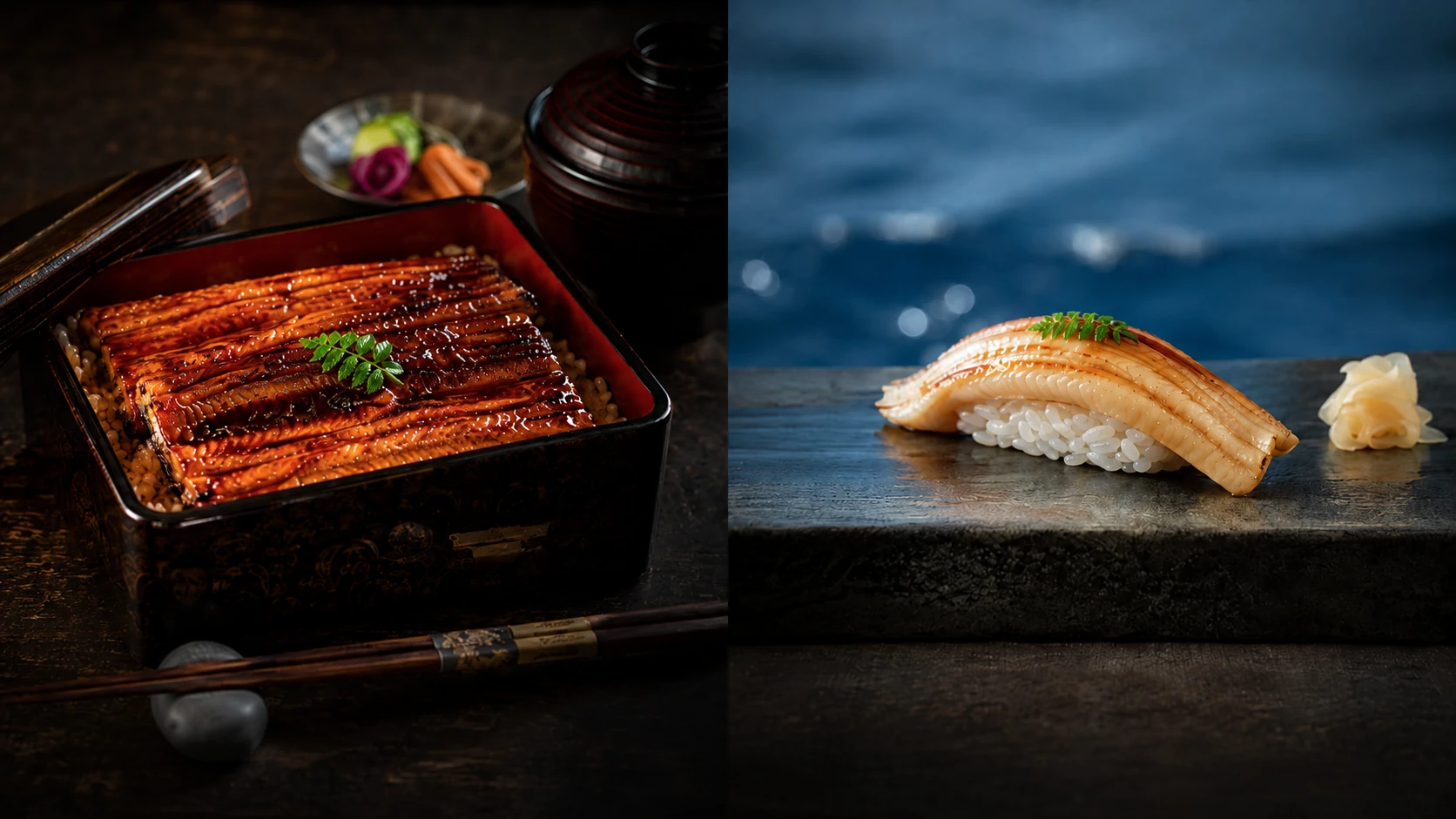
Freshwater eel in Japanese dining context, strongly associated with grilled rice dishes such as unaju and unadon.
Anago
Saltwater conger eel, often encountered as a cooked sushi topping or a lighter eel preparation.
Kabayaki
A tare-brushed grilling method most closely associated with unagi over rice, not a generic word for every eel dish.
Menu tip
If an English menu only says “eel”, look for unagi, anago, freshwater eel, conger eel, kabayaki, unaju, or unadon.
Internal path
This article supports the English cornerstone by resolving menu confusion between unagi, anago, eel sushi, and grilled eel over rice.
01 / Quick answer
The short difference between unagi and anago
Unagi and anago are both translated as eel in English, but they point to different ingredients and different dining expectations.
Unagi usually refers to freshwater eel in Japanese cuisine. It is the word most international readers should expect when researching Japanese grilled eel, kabayaki, unaju, unadon, or premium eel served over rice.
Anago refers to saltwater conger eel. It often appears in sushi contexts and is usually understood as lighter, softer, and less fatty than the unagi dishes people associate with tare-brushed grilled eel over rice.
- Unagi: freshwater eel, rich, often grilled as kabayaki.
- Anago: saltwater conger eel, often seen in sushi.
- The English word “eel” is not specific enough for Japanese menus.
02 / Freshwater eel
What is unagi?
Unagi is the eel term behind the most famous Japanese grilled eel rice dishes.
For global readers, unagi should be understood from the dish outward. It is tied to cooked dining formats: opened eel, careful grilling, tare brushing, and hot rice.
That is why unagi search demand overlaps with Japanese eel, grilled eel, kabayaki, unagi rice, unaju, unadon, and hitsumabushi. The key expectation is richness, aroma, sauce integration, and rice.
- Unagi is usually cooked.
- The classic reference point is kabayaki-style grilled eel over rice.
- Unagi content should explain cooking method and rice context.
03 / Saltwater conger eel
What is anago?
Anago is saltwater conger eel and is commonly encountered by international diners through sushi menus.
Anago is a separate menu term from unagi. In English it is often translated as conger eel or sea eel, but many restaurant menus simply write eel.
The flavor and dining role are different from the classic unagi-over-rice experience. Anago is often presented in a sushi context with a softer, lighter impression and a sauce or glaze that supports the topping.
- Anago is not the same ingredient as unagi in Japanese menu language.
- It is strongly associated with sushi and lighter cooked eel preparations.
- It can be sauced or grilled without becoming the same as unagi kabayaki.
04 / Ingredient framing
Freshwater eel vs saltwater conger eel
The freshwater versus saltwater distinction is the simplest accurate starting point, but the culinary context matters just as much.
Freshwater and saltwater framing gives readers a clean first distinction: unagi is freshwater eel; anago is saltwater conger eel. However, a menu reader also needs to ask how the eel is prepared and served.
The same English word eel may appear beside very different dishes: sushi, a rice bowl, or a boxed unaju meal. The cooking and serving format determine the eating experience.
- Do not assume every Japanese eel dish is unagi.
- Do not assume every eel sushi topping is grilled unagi rice-dish style.
- Use ingredient, cooking method, and serving format together.
05 / Sushi menus
Why anago appears so often in sushi contexts
Many international readers first see the word anago on a sushi menu, where the expectations are different from a grilled eel rice dish.
In sushi contexts, anago often works as a cooked topping with gentle sweetness and a soft bite. It may be served as nigiri and finished with a glaze or sauce.
Unagi can also appear in sushi restaurants, especially outside Japan, but it should not erase the distinction. Anago means conger eel; unagi, kabayaki, unaju, and unadon move closer to freshwater eel and rice context.
- Anago sushi is about cooked conger eel topping and sushi rice balance.
- Unagi points to freshwater eel.
- A menu that says only eel sushi is ambiguous.
06 / Rice dishes
Why unagi is strongly tied to grilled rice dishes
The strongest unagi association is not sushi; it is grilled eel with rice, especially kabayaki served as unaju or unadon.
For many Japanese diners, the central unagi experience is rice-centered. Unaju presents grilled eel over rice in a box-style vessel. Unadon presents grilled eel over rice in a bowl.
This matters for global SEO because readers searching unagi may be thinking of sushi, sauce, or grilled eel. A strong guide should redirect that confusion toward freshwater eel, tare-brushed grilling, and hot rice.
- Unaju: grilled unagi over rice in a box-style presentation.
- Unadon: grilled unagi over rice in a bowl.
- Hitsumabushi: chopped grilled eel over rice, often enjoyed in stages.
07 / Kabayaki
How kabayaki relates to unagi and anago
Kabayaki is a preparation method, but in international search behavior it is most closely tied to unagi.
Kabayaki means the eel is opened, grilled, brushed with tare, and finished so the surface becomes glossy and aromatic. It should not be reduced to eel with sweet sauce.
In common global menu and search context, kabayaki most often points to unagi. Anago can be cooked with sauce or served with a glaze, but readers should not treat anago and unagi kabayaki as interchangeable.
- Kabayaki is a method, not just a sauce name.
- Unagi kabayaki is tare-brushed grilled freshwater eel.
- Anago may be sauced, but it is not the same menu expectation as unagi kabayaki over rice.
Compare in practice
Use three clues before deciding what “eel” means.
The safest reading is not ingredient alone. International menus become clearer when you combine the eel term, the cooking method, and the serving format.
Ingredient
Unagi means freshwater eel. Anago means saltwater conger eel.
Method
Kabayaki means tare-brushed grilling, most closely tied to unagi over rice.
Serving
Sushi context often points to anago; unaju and unadon point to grilled unagi with rice.
Related reading
Continue through the published English cluster.
Published cornerstone
Complete Unagi Guide
The English cornerstone page covering unagi, kabayaki, shirayaki, tare, charcoal grilling, serving styles, reheating, gifts, and sourcing responsibility.
Commerce status
Editorial only
This global article does not show international prices, carts, checkout links, or overseas delivery promises.
FAQ
Common unagi and anago questions
Are unagi and anago the same?
No. Unagi usually means freshwater eel, while anago means saltwater conger eel. English menus may translate both as eel, but the ingredient and dining context are different.
Is anago freshwater eel or saltwater eel?
Anago is saltwater conger eel. It is often encountered in sushi contexts and is usually lighter than rich grilled unagi dishes served over rice.
Is unagi usually served as sushi?
Unagi can appear in sushi restaurants, especially outside Japan, but the classic Japanese unagi experience is grilled freshwater eel served with rice as kabayaki, unaju, unadon, or hitsumabushi.
Is anago served uncooked?
Anago is typically cooked before serving. In sushi contexts, it is commonly presented as a cooked topping with sauce or glaze.
Are unagi and kabayaki the same thing?
No. Unagi is the freshwater eel. Kabayaki is the tare-brushed grilling method most closely associated with unagi served over rice.
Can anago be kabayaki?
Anago can be grilled or sauced, but international readers should not treat anago sushi and unagi kabayaki over rice as the same dish. The menu context matters.
What should I order if I want grilled eel over rice?
Look for unagi, kabayaki, unaju, unadon, or hitsumabushi. Those words are more reliable than the English word eel by itself.
Why do menus translate both unagi and anago as eel?
Many English menus simplify Japanese terms for readability. That is convenient, but it hides whether the dish is freshwater eel, saltwater conger eel, sushi, or a grilled rice dish.
Waitlist
Join the international unagi guide waitlist
We will notify you when KatanaUnagi can support international shipping. Until then, this guide remains editorial only: no overseas prices, no cart links, no checkout, and no delivery promises.