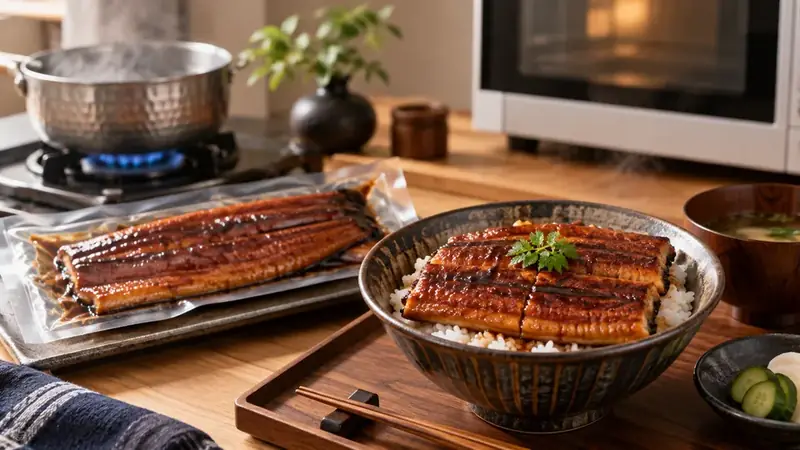
The essentials
For purchased kabayaki, start with the method, time and power stated on the product. Frozen and chilled portions, and different types of packaging, require different handling. This guide covers already-cooked eel in general; it is not a raw-eel recipe or a verified heating instruction for a particular product.
Read the product and packaging instructions first
Check that the eel is already cooked, whether it is frozen or chilled, whether thawing is required and which heating method is permitted. Find out whether the bag stays on and whether an outer sleeve, tray or separate sauce sachet must be removed. Vacuum-packed does not automatically mean boil-in-bag or microwave-safe.
Thickness, weight, starting temperature and appliance power all affect heating. There is no single number of minutes that suits every portion. When instructions are missing or unclear, ask the seller rather than guessing or borrowing a time from a different product.
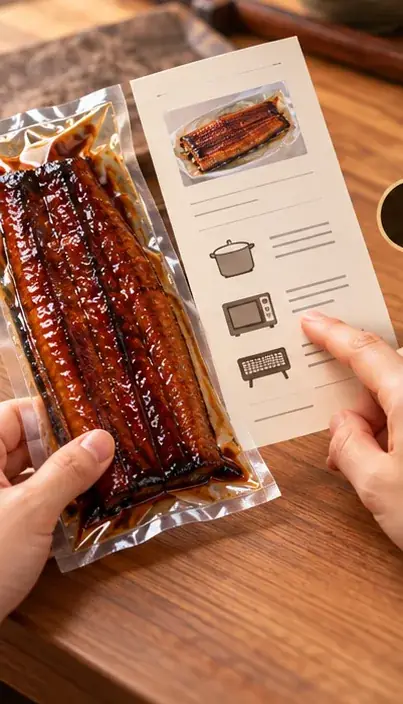
Some products are designed for this and others require thawing first. The choice cannot be made from “microwave” or “hot water” alone. Follow the directions for your particular product.
Hot-water heating: only with suitable packaging
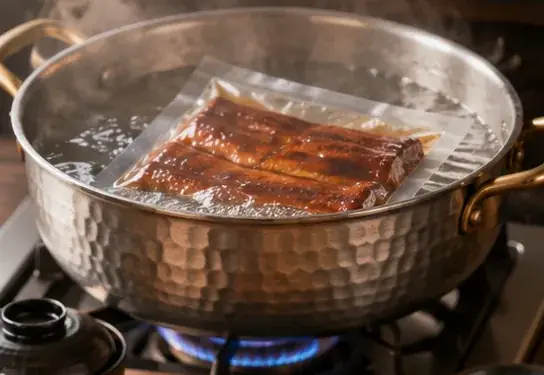
Use this method only when the manufacturer specifies it. Follow the directions for the correct bag, thawing conditions, water temperature and time. Handle sleeves, labels and sauce sachets as instructed. A third-party producer’s published timings describe its own products, not every pack of kabayaki.
Use suitable utensils when removing the bag and take care around hot water, packaging and escaping steam. Transfer the eel to a clean plate after opening. A torn or leaking bag is not a problem to solve by simply following the normal heating procedure; check with the seller.
Follow the heating instructions on your product. Heat it in the pouch only when the label explicitly permits it.
Microwaving: check the bag and the power setting
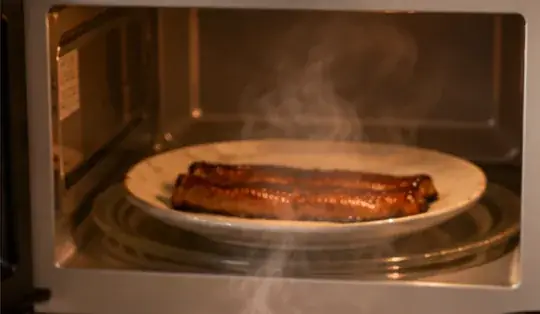
Do not put a bag in the microwave unless it is expressly suitable. If the label says to remove the packaging, transfer the eel to a microwave-safe plate. Follow instructions for covering, vents, heating and standing time. Keep metal out of the microwave.
When your appliance’s power differs from the label, consult the producer’s guidance rather than assuming that a simple time conversion guarantees the result. Excess heating can dry the eel, but surface appearance alone also cannot confirm adequate heating throughout. Follow the full instructions, not just the timer.
Using a pan or grill for the finish
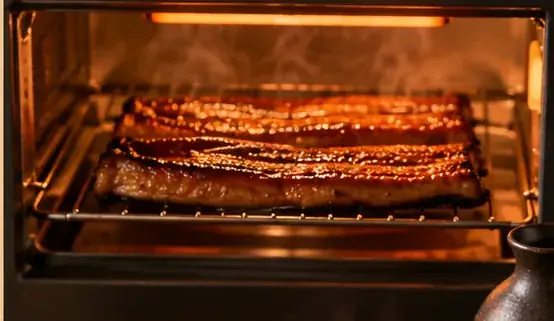
Where the product allows pan or grill heating, follow the stated thawing and heating conditions first. A grilled finish can be a serving choice, but do not use intense surface heat as a substitute for warming the middle properly.
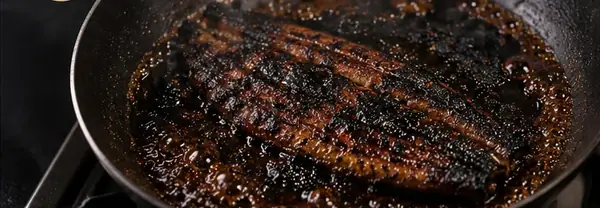
Sugary glaze can burn, so watch the eel rather than leaving it over strong heat. Whether foil or a cooking liner is suitable depends on the appliance; check its instructions too. There is no need to add an extra finishing stage when it is not supported by the product directions.
Prepare the rice before the eel is ready
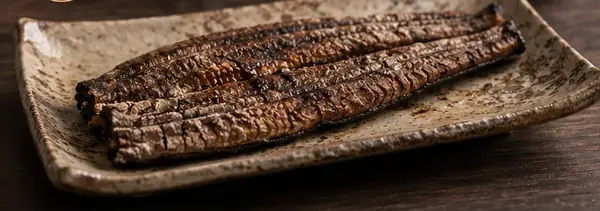
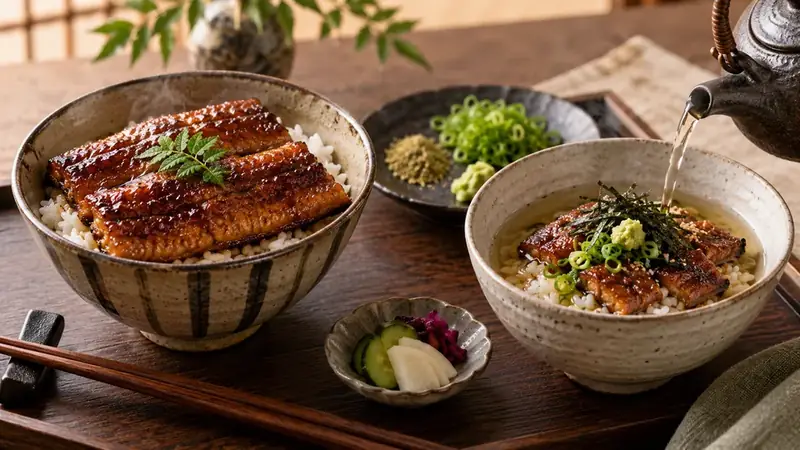
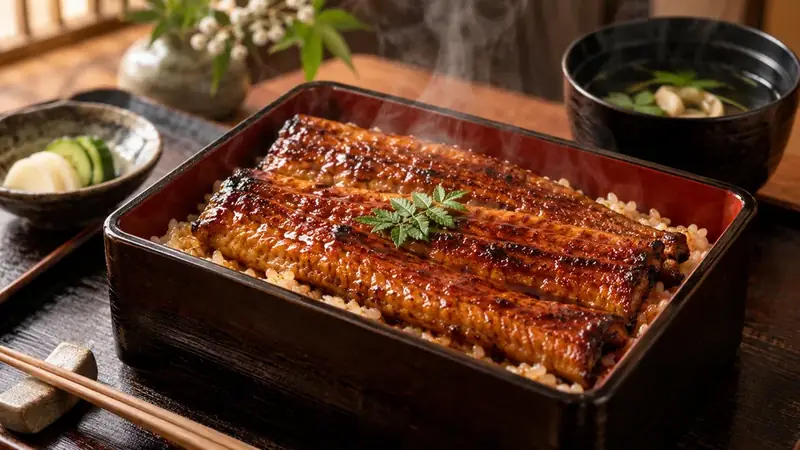
Have rice, a clean serving dish, sauce and any condiments ready before reheating. Place the eel over rice for an unadon-style meal. You can add sauce gradually after tasting rather than using the whole sachet at once.
For a hitsumabushi-inspired meal, cut the eel into smaller pieces and try condiments and broth with separate portions. Adding broth to only one serving leaves the remaining rice available for other variations. Avoid leaving the meal at room temperature for a long period.
Thawing, storage and leftovers
Follow the labeled storage temperature and shelf life. Do not thaw the eel by leaving it on the counter; use a method appropriate to the label, such as refrigeration. With vacuum-packed fish, check particularly for instructions to open or remove the packaging before thawing.
Reheat only the amount you need and refrigerate leftovers promptly in a suitable container. The unopened shelf life is not necessarily valid after opening or thawing. Do not assume reheating makes food with an unknown storage history safe; consult the seller or food-safety guidance when unsure.
FAQ
Frequently asked questions
Can I heat the eel straight from frozen?
Some products are designed for this and others require thawing first. The choice cannot be made from “microwave” or “hot water” alone. Follow the directions for your particular product.
Can any vacuum bag go in the microwave?
No. Vacuum packaging and microwave suitability are separate properties. Check explicit bag-in-microwave instructions and any required steam venting.
How many minutes should I use?
There is no universal time: amount, thickness, starting temperature and power differ. Use the product’s stated time and power, or ask the seller if those details are missing.
What is unagi kabayaki? Grilled eel, shirayaki and rice dishes explained
Sources and references
- オススメの美味しいうなぎの温め方 川口水産 / Kawasui
- Refrigerator Thermometers — Cold Facts about Food Safety U.S. Food and Drug Administration
- Try Hitsumabushi, an Aichi Delicacy Japan National Tourism Organization